Advice on how to demo for a master bathroom renovation. These were our steps (and some tips) to demolish our old master bathroom so work could begin on the renovation.
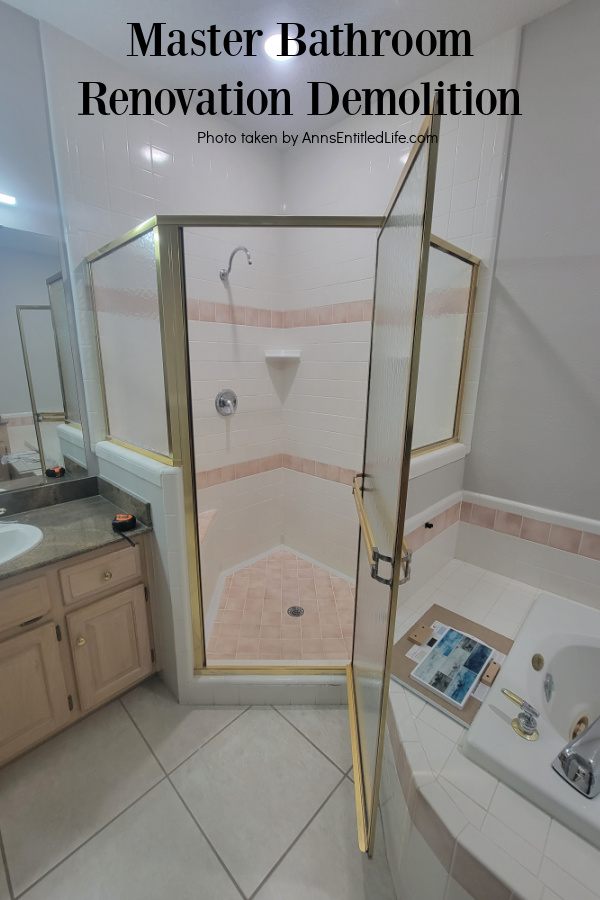
Our master bathroom renovation took a lot of planning, complete demolition, and then the renovation itself could begin. This is the long, drawn out saga of our master bathroom renovation.
Master Bathroom Renovation – The Demolition | Remodel Tips
We did plan so well that the renovation itself went quite smoothly. This, however, was not our first bathroom renovation. We had learned a lot from prior renovations.
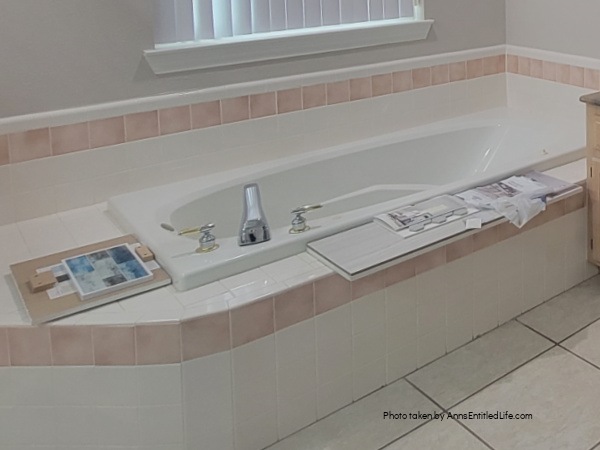
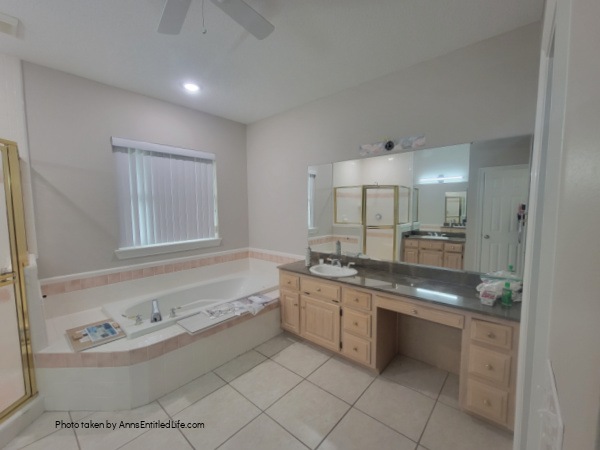
Demoing for us involved protecting the floors to the front door with ram board, using sticky mats, renting a dumpster and having it delivered, and then Hubby got down to business removing the fixtures, some drywall, the closet, vanities, and popcorn ceiling.
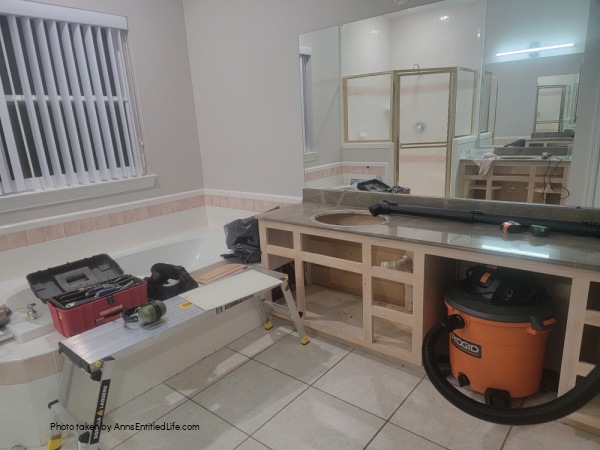
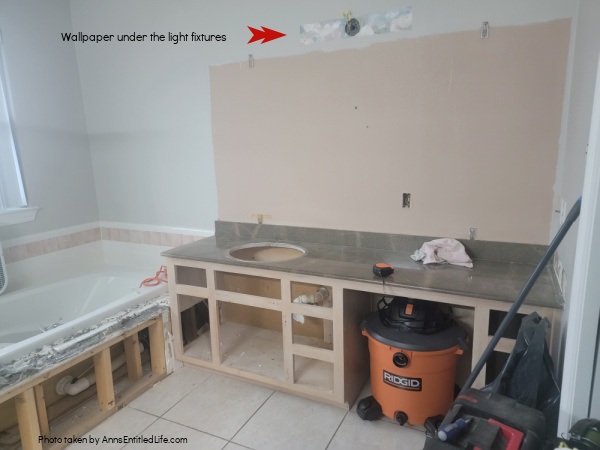
The tools used to demolish the old bathroom were a reciprocating saw, a sledgehammer, and a roto hammer (2½ wide) for tile removal on the shower and floor.
A lot of the work is just grunt work, but a few “special” things happened during this demo.
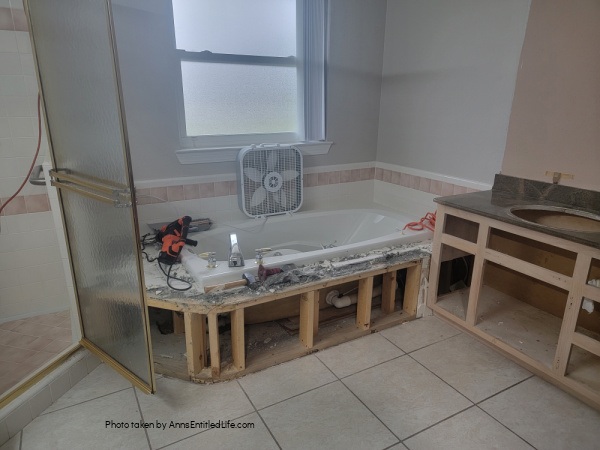
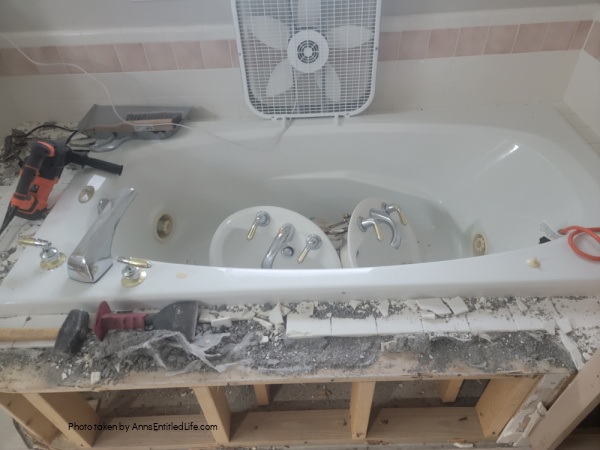
When Hubby pulled off the front tiles on the Jacuzzi, the junction box that powered it was just lying on the ground. He was able to turn off the power, cap it, and then that power supply ended up being the plug on my side of the vanity to power my hair tools. It was 20 amp.
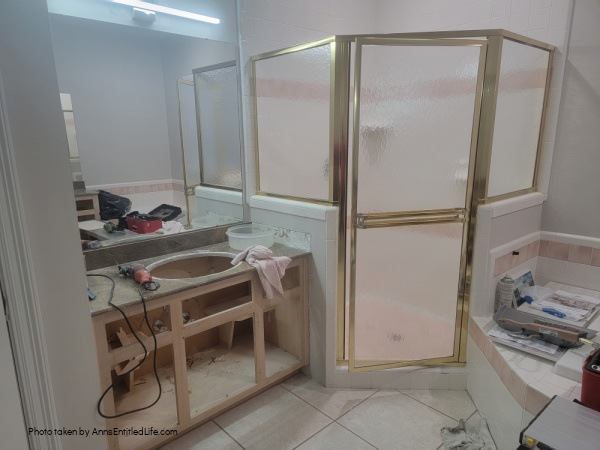
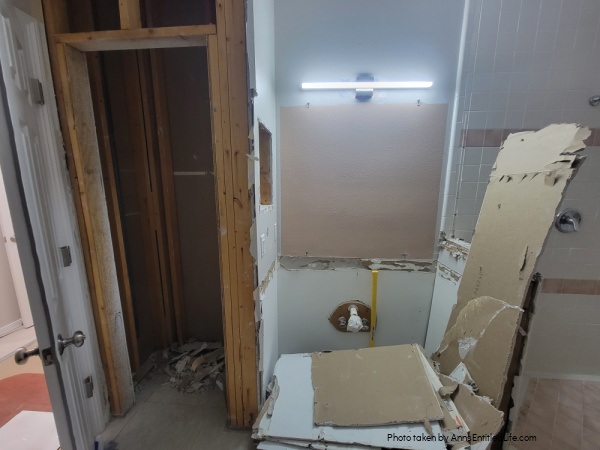
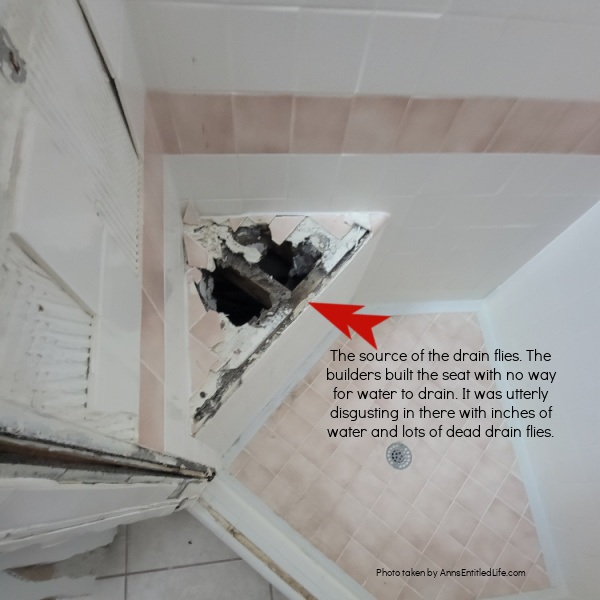
While Hubby was demoing we discovered where the drain flies were coming from. The seat in the shower was set on top of the drain pan and water had gotten in. That water was never going to drain out. It was the perfect breeding ground for drain flies. That shower had to go to solve the drain fly problem.

While Hubby demoed, we discovered there was a huge hole in the concrete slab under the tub. Apparently, that was how it was done years back when this house was built (the house is approximately 30 years old). The inspector told me it is no longer code, but it wasn’t uncommon to have that open hole and it was not against code in the ’90s.
I was freaked out, however. A big hole in the floor? Who knew what would come up through it! (Nothing, the slab was around it, but that didn’t stop my freak-out.)

Hubby had to cover it each night before the plumbers arrived to do their work. We also had to keep the door closed because my-oh-my was it humid in there!! As soon as that open hole was exposed, the humidity in the house went up 100%. Covering it and closing the door helped a lot. The plumbers did end up cementing in the hole which was necessary for the flooring and tile work.
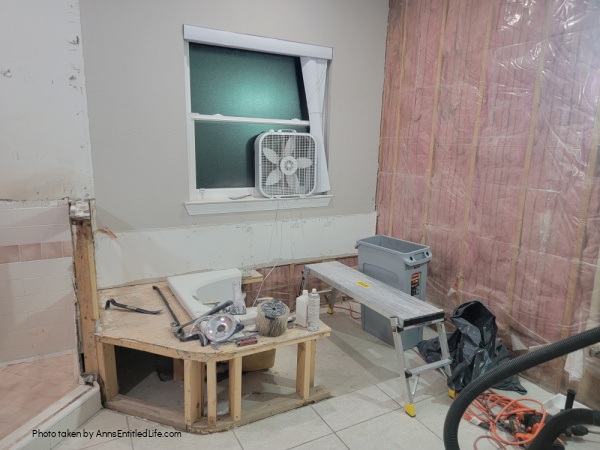

The plumbers came in a number of times:
– During removal and demolition to cap off a sink, the tub, and shower.
– They moved pipes for the shower and double sink, filled in the hole in the floor, and moved the drain in the shower over a few inches. They also had to put in new pipes for the shower and sinks while the walls were exposed.
– They returned for the finish work to put the toilet in and hook up the sinks.
The popcorn ceiling removal was done on ladders. And, it was pretty basic. Hubby filled a large sprayer with water, wet down the popcorn, and gently scraped the wet popcorn off with a drywall knife. He described the process as slow and messy. He had to be careful not to cut or puncture the drywall.
Once he removed the popcorn he could see the tape on the drywall. Popcorn is used by builders so they do not have to finish the drywall well enough to paint. Hubby had to carefully sand and mudded to finish the drywall and get it up to snuff for painting so no dings, divots, tape, or marks would show.
The popcorn removal went like this:
– Remove popcorn
– Sealed to avoid bubbles
– Sand and mud to finish to paint standards

We were fortunate to have a neighbor help Hubby with toting out the demolition materials out to the dumpster. Some of it was very heavy and required two people, and I am no longer 40 years old and able to lift and carry like I once was.
Hubby had decided he wanted a plainer molding than what we had in the rest of the house (and that bathroom). I was skeptical as I like when things are cohesive and flow, but that room is off by itself so I acquiesced. He tore off the old molding and had it in the dumpster as soon as the word “ok” let my lips.
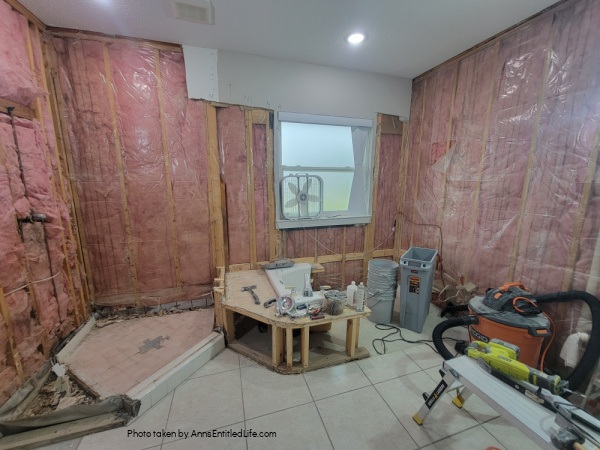
Once the room was emptied of all the fixtures, vanities, bathroom closet, tiling, and flooring, we used some tape to do the final plotting of the shower. We wanted to be certain the door would clear, and to get the most room possible inside it. He also had to figure out the side of the linen cabinet to build the wall that would form the shower. A soffit was put in above where the linen cabinet was going to be installed. That had electrical wires running through it, and covered up the leftover framing from the old closet.
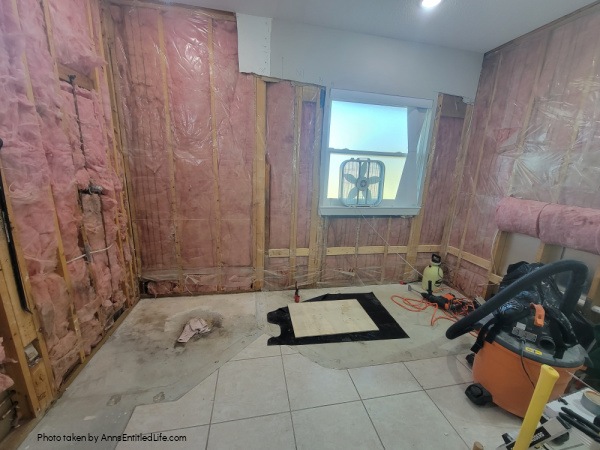
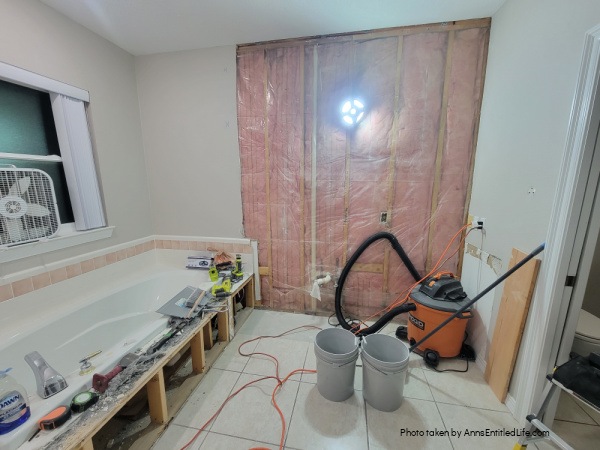
As you can see, part of the demolition overlapped with some of the new renovation. For instance the water cut-offs and filling in that hole were done in the midst of the demolition. The electricity has to be shut off to that room as walks came down and then electric was run while the walls were exposed. This was nice as there was no fishing of wires through the walls.
After the demolition was complete, it was on to framing, dry walling, painting, tiling, cabinetry, fixtures, lighting, fans, medicine chests, and shower door. LOL It is like a ballet.
● For more renovations on Ann’s Entitled Life, click here.
● If you enjoyed this post, be sure to sign up for the Ann’s Entitled Life weekly newsletter, and never miss another article!
Leave a Reply